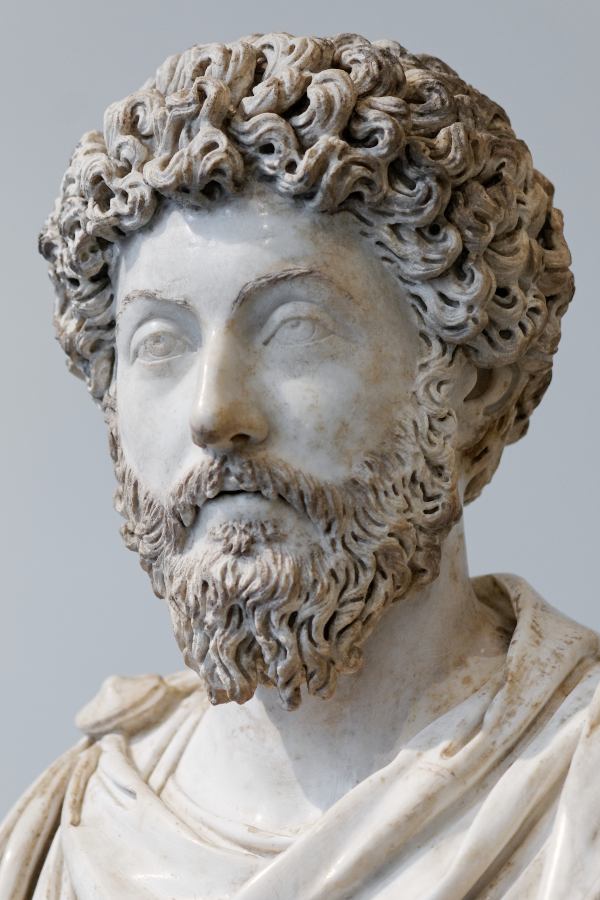
Cultural Synthesis, Ethical and Religious Reflection.
Roman and Early Christian Philosophy
from 27 BCE to 451 CE
Roman and Early Christian Philosophy covers the period from the birth of Christ to the fall of the Roman Empire in the West. During this time, Greek philosophy continued to influence the Romans, who in turn made important contributions to the development of Christian thought. Roman philosophers focused on ethics, politics, and the nature of the universe. Some of the most influential Roman philosophers were Cicero, Seneca, and Marcus Aurelius. Early Christian philosophy was largely concerned with the interpretation of Scripture and the relationship between faith and reason.
One of the key developments in Roman philosophy was the rise of Stoicism, which emphasized the importance of living in accordance with nature and the pursuit of inner peace. The Stoics believed that virtue was the only true good and that external goods, such as wealth and power, were ultimately irrelevant to happiness. The Roman philosopher Seneca was a prominent Stoic thinker and his writings on ethics and the nature of the universe have continued to influence philosophical thought to this day.
With the rise of Christianity, a new form of philosophy emerged that was focused on interpreting and reconciling Christian beliefs with philosophical ideas. One of the most important early Christian philosophers was Augustine of Hippo, who was heavily influenced by the philosophy of Plato and who sought to reconcile Christian doctrine with the ideas of the ancient Greeks. Augustine's writings on the nature of God, free will, and the problem of evil were particularly influential.
During this period, there was also a growing tension between faith and reason. While some early Christian philosophers saw no conflict between Christianity and philosophy, others were more skeptical of the role of reason in understanding the divine. This tension would continue to shape philosophical thought for centuries to come.
Overall, Roman and Early Christian Philosophy represents an important period in the development of Western thought. It was a time of great intellectual ferment, as philosophers sought to understand the nature of the universe, the role of humanity within it, and the relationship between faith and reason. Many of the ideas developed during this period continue to influence philosophical thought today, making it a rich and vibrant area of study for anyone interested in the history of ideas.
Roman and Early Christian
Timeline
Keeping calm and carrying on.
StoicismFrom 300 BCE to 200 CE
All is One, One is All.
NeoplatonismFrom 200 to 500 CE
Seeking truth through faith and reason.
Early Christian PhilosophyFrom 30 to 451 CE
Faith seeking understanding.
Patristic PhilosophyFrom 100 to 800 CE