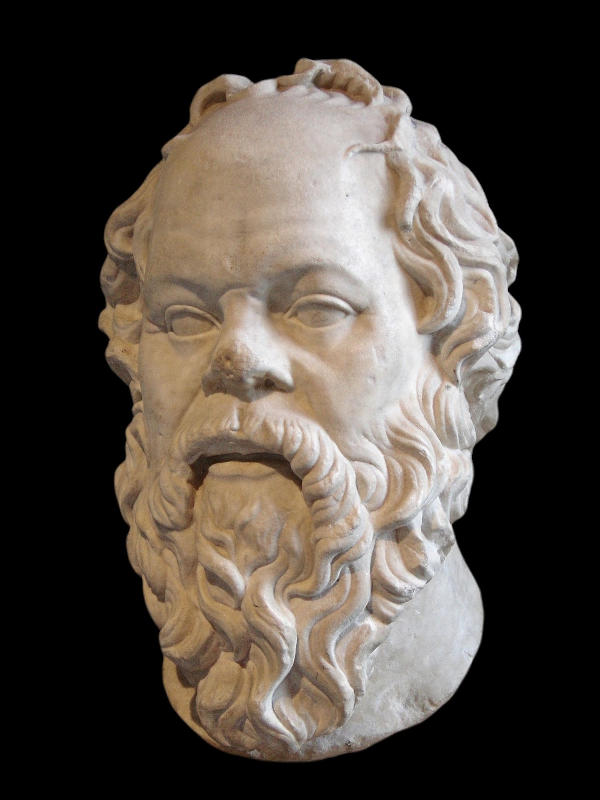
Inquiry and Insight, Reason and Reflection.
The Socratic and Platonic Tradition from 624 to 450 BCE
The Socratic and Platonic tradition emerged in ancient Greece during the period from 624 to 450 BCE. This era was marked by significant social, cultural, and intellectual developments, including the rise of democracy, the flourishing of Greek art and literature, and the emergence of new philosophical schools of thought.
Socrates was a key figure in the Socratic tradition and is considered one of the founders of Western philosophy. His approach to philosophy involved a method of questioning known as the Socratic method, which involved asking probing questions to clarify and challenge commonly held beliefs. Through his questioning, Socrates aimed to uncover the truth and to expose contradictions in people's thinking.
Plato, one of Socrates' most famous students, developed his own philosophical ideas based on the Socratic tradition. Plato believed that knowledge of reality could be attained through reason and that the world of ideas, or forms, was the true reality. He argued that the physical world was merely a reflection of the world of ideas and that the ultimate goal of human existence was to attain knowledge of these ideas.
Plato also developed the concept of the ideal state, in which individuals would be guided by reason and virtue, rather than by their desires and passions. This ideal state would be ruled by philosopher-kings, individuals who had attained the highest level of knowledge and wisdom.
The Socratic and Platonic tradition had a significant impact on subsequent philosophical and intellectual developments. It influenced the development of other philosophical schools of thought, such as Aristotelianism and Stoicism, and it also had a profound impact on Western culture more broadly.
The ideas of the Socratic and Platonic tradition influenced the development of the Western legal system, as well as the Christian and Islamic intellectual traditions. Plato's concept of the ideal state also influenced political theory, and his ideas about the relationship between reason and virtue continue to be influential in contemporary philosophy.
Overall, the Socratic and Platonic tradition represented a significant development in the history of Western thought. Its influence can still be felt today, and it continues to inspire philosophers, scholars, and thinkers around the world.
Socratic - Platonic
Timeline
The father of Western philosophy.
Socratesfrom 469 to 399 BCE
The philosopher of Forms.
Platofrom 423 to 347 BCE
The birthplace of higher learning.
The Academyfrom 387 BCE to 86 CE
The synthesis of Platonic philosophy.
The Hellenistic Platonists323 to 31 BCE
The revival of Platonic philosophy.
Neoplatonism3rd to 6th century CE